How Body Tension Impacts Vocal Authority in the Courtroom
If you want to communicate with clarity, confidence, and authority in the courtroom, you cannot ignore your nervous system.
Regulating your nervous system is foundational to effective leadership, strong decision-making, and clear thinking. When your body is in a regulated state, your brain stays online. You process information more effectively. You respond instead of react. And your communication becomes more intentional.
Breathwork plays a major role in this process. When you use your breath to activate the parasympathetic nervous system, you shift into a rest and digest state. This is where higher-level thinking happens. It is also where jurors are better able to learn, process, and make thoughtful decisions.
But there is another critical piece that often gets overlooked.
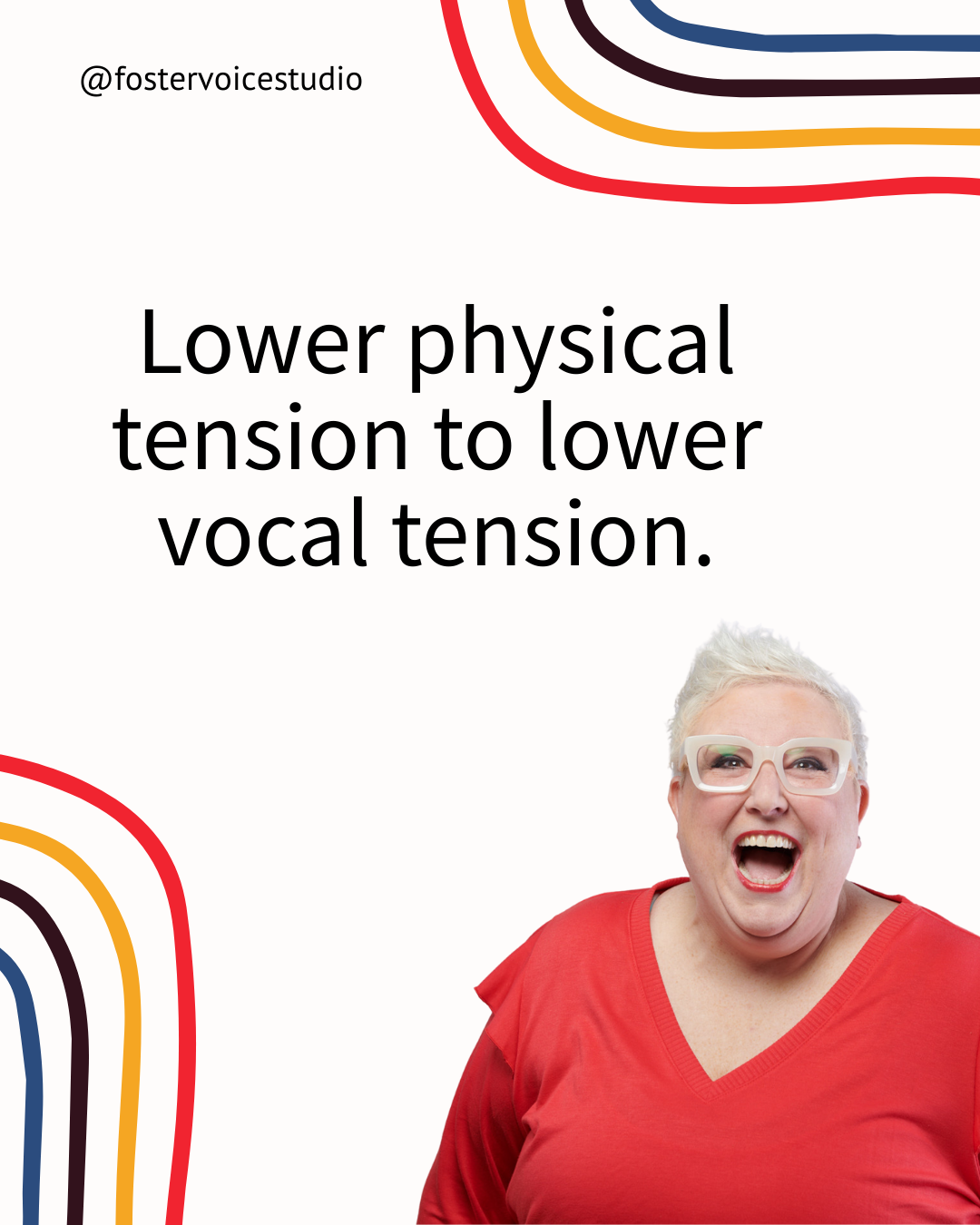
If your body is tense, your voice will be too.
The Connection Between Muscle Tension and Vocal Performance
Many professionals struggle with vocal issues like sounding tight, squeaky, thin, or lacking volume. These are not just voice problems. These are body problems.
You cannot have a free, resonant voice in a tense body.
Tension in your upper body directly interferes with how your voice functions. When your shoulders, upper back, and neck are tight, they restrict the natural movement and coordination required for efficient vocal production.
This is because tension does not stay isolated in one area. The body works as a connected system. When one muscle group engages, others engage as well.
For example, if you create tension in your upper back or shoulder blades, you'll probably feel your neck and jaw get activated as well. These areas are linked together through muscular chains. Likewise, when you take a shallow, high breath into your chest, the muscles in the front of your neck become active and tight.
Okay, so, why does this even matter? It matters because your voice lives in your neck.
Your vocal cords sit inside your larynx, and your larynx is surrounded by muscles that are highly sensitive to tension. When your neck muscles are tight, the muscles surrounding the larynx also get tight, and your voice cannot function efficiently. You may lose power, have a hard time projecting, or sound more strained than you intend.
Expecting a strong, flexible voice in a tense body is unrealistic. And yet a lot of attorneys continue to behave as if it's a non-issue. They're wrong.
How Tension Impacts Your Authority and Clarity
In high-stakes communication environments like the courtroom, vocal quality directly affects how your message is received.
A tense voice can sound:
-
strained or sharp
-
breathy or weak
-
rushed or unstable
This is a surefire way to undermine your credibility, even if your content is strong.
On the other hand, a relaxed and well-supported voice communicates confidence, control, and authority. It allows you to vary tone, pacing, and emphasis so your message lands clearly, with impact.
Your physical state shapes your vocal presence, and your vocal presence shapes how others perceive you.
How to Reduce Tension and Improve Your Voice
Improving your voice starts with awareness.
Throughout your day, take moments to check in with your body. Notice where you are holding tension. Common areas include the shoulders, upper back, jaw, and neck.
You don't need a complicated routine to begin making changes. Simple awareness starts to create meaningful shifts.
Try brief body scans while sitting at your desk or stopped at a light. Allow your shoulders to release. Unclench your jaw. Let your neck soften. Take a slower, lower breath and allow your body to settle.
Small resets like this help reduce accumulated tension and create better conditions for your voice to function.
What you do outside of work also matters. Activities like stretching, yoga, or foam rolling can help release chronic tension patterns and improve overall mobility. When your body is more relaxed and aligned, your voice has more freedom and range.
Strong Voice, Strong Presence
If you want a voice that carries authority, clarity, and control, you must address what is happening in your body.
A regulated nervous system supports clear thinking and effective communication. A relaxed body supports a strong, flexible voice.
When you reduce tension, you gain access to the full range of your vocal expression. You can project with ease, vary your tone with intention, and communicate in a way that holds attention and builds trust.
Your voice is not separate from your body. It is shaped by it.
If you want to elevate your courtroom communication, start by paying attention to how you are holding yourself physically. Release what you can. Breathe with intention. Create space for your voice to work the way it was designed to.
LET'S STAY CONNECTED
You’re already speaking. Let’s make it count.
Get one smart, time-saving vocal tip each Tuesday to help jurors learn faster, retain more, and stay connected — so your message lands the first time.
You're safe with me. I'll never spam you or sell your contact info.