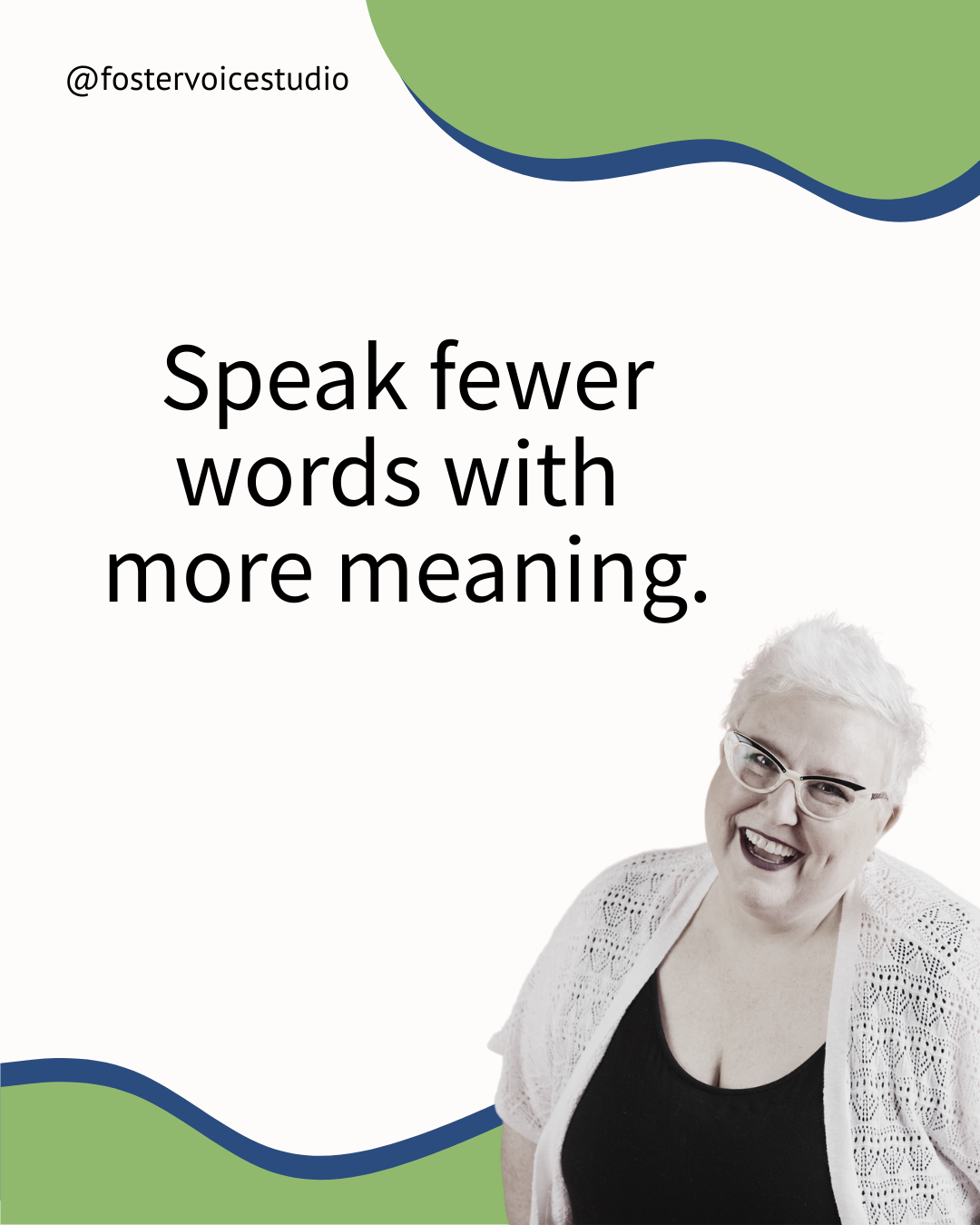
Why Using More Words Is Hurting Your Case
I’m guilty of this—and I’m willing to bet you are too.
In fact, I’m fairly confident you are, because I see it all the time with my clients. It’s incredibly common.
It’s over-communicating.
Now, let me be clear about what I mean here. Communication is one of my core values. I appreciate thoroughness. I like having complete information so I don’t have to chase down missing details or ask a dozen follow-up questions just to understand what’s going on.
That’s not the problem.
The problem is using too many words—and then using even more words to restate what you already said, just in a slightly different way.
In my coaching sessions, we do a lot of work around storytelling and teaching. I’ll let a client walk through something, and then I’ll stop them and say, “Okay—tell me the exact same thing, but try this with your voice,” or “Try this with your nonverbals.”
And I always give one rule: don’t say more—say it better.
Almost every time, they say more.
They come at it from a different angle. They add extra details. They try to clarify what was already clear. Because more words feel safer.
And I get it. You’re trying to create clarity.
But clarity doesn’t come from more explanation.
It comes from intention and strategy—not verbal density.
More words don’t make your audience connect more deeply. In fact, they often do the opposite. They create additional layers for the brain to process, which can dilute your message instead of strengthening it.
You don’t need more words.
You need more meaning.
This is where your vocal delivery becomes everything.
The five building blocks I teach—pitch, pace, melody, volume, and tone—are what transform plain information into something memorable. These are the tools that carry meaning beyond the literal words you choose.
This is the difference between reporting and reliving.
Let’s take something simple. Imagine you’re describing a moment from a trip—something you call “absolutely magical.”
You can say that in a flat, neutral tone: “It was absolutely magical.”
Or you can let your voice carry the experience: “It was absolutely magical.”
Same words. Completely different impact.
One version is forgettable. The other creates an image. It sparks imagination. It invites connection.
And that’s what matters.
Your audience doesn’t need you to pile on more descriptive details to understand the moment. They don’t need the exact temperature or the precise shade of the sunset. When your delivery is aligned with your message, their brain fills in the details for you.
That’s a far richer experience—and a far more effective one.
Now, of course, there are times when specific details matter. In the courtroom, facts are critical. But even then, how you deliver those facts determines whether they stick.
If you want jurors to actually use your points in deliberation, those points have to move beyond working memory and into long-term retention. And that only happens when information is meaningful enough to anchor into their existing knowledge and experiences.
A three-week trial is far too long for jurors to rely on working memory alone. It’s simply not how the brain is designed.
So if you want your key points to last, don’t give them more words.
Give them more meaning.
When you learn to use your voice and nonverbal communication with intention, you can say less while delivering far more impact. You reduce cognitive load. You increase clarity. And you make it easier for jurors to remember what actually matters.
Because in the courtroom, it’s not about how much you say.
It’s about what stays.
Until next time, keep fostering your voice.
LET'S STAY CONNECTED
You’re already speaking. Let’s make it count.
Get one smart, time-saving vocal tip each Tuesday to help jurors learn faster, retain more, and stay connected — so your message lands the first time.
You're safe with me. I'll never spam you or sell your contact info.