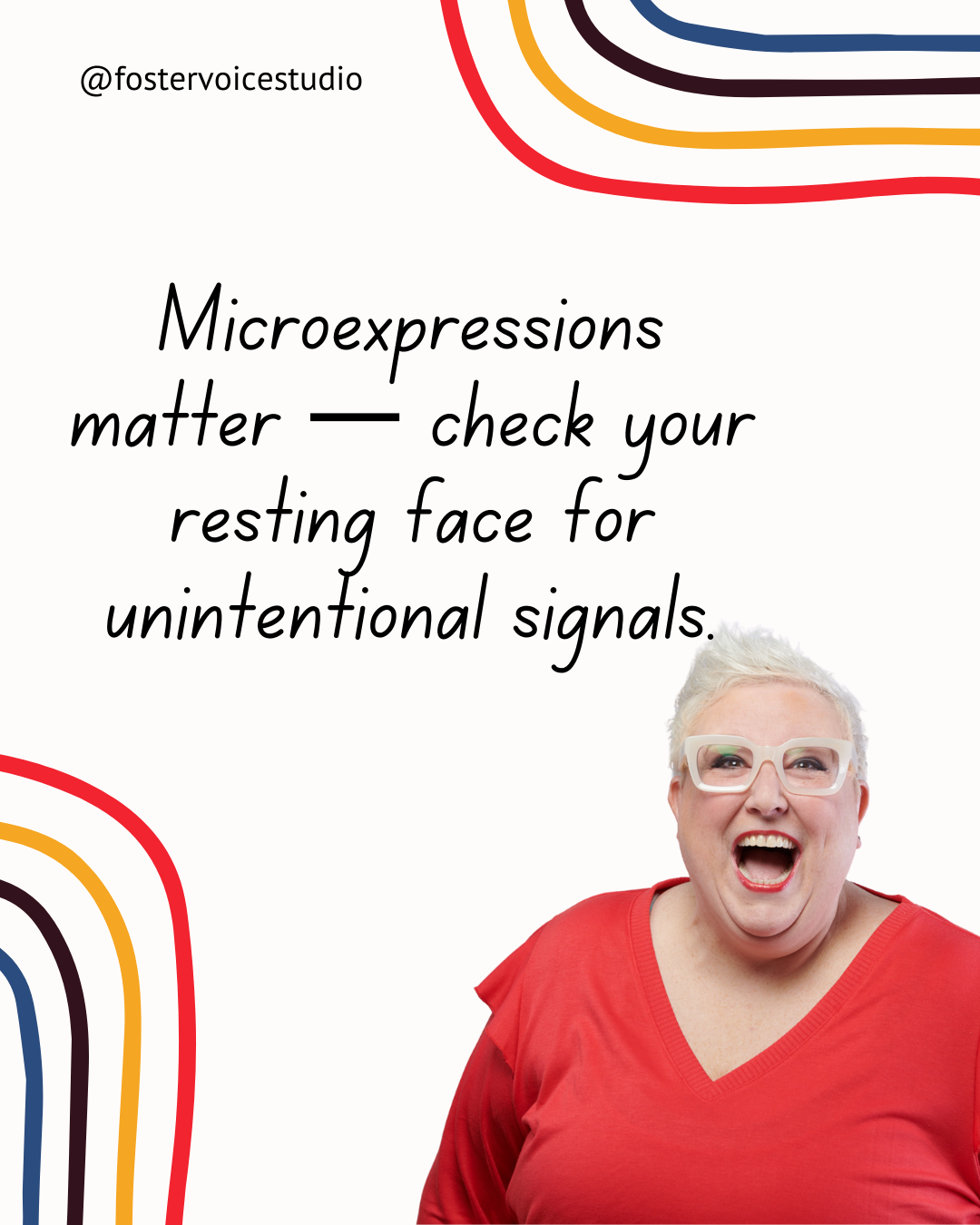
Your Face Is Speaking Before You Do: Why Trial Attorneys Must Train Their Facial Communication
On my podcast, I spend a lot of time on vocal development for trial attorneys. It’s probably the least talked-about aspect of strategic legal communication — and yet, every time I speak at a conference, attorneys swarm me afterward saying things like:
“Why have I never heard about this before?”
“I wish they taught this in law school.”
“This makes so much sense — I just wish I learned it 15 years ago.”
So yes — I’m going to keep preaching the importance of expanding your vocal range through the 5 Vocal Building Blocks: pitch, pace, melody, volume, and tone.
But today?
We’re zooming out.
Because as powerful as your voice is, it’s only one piece of your courtroom presence.
Your communication toolbox includes:
-
Voice
-
Face
-
Body
-
Breath
And today, we’re talking about your face — because jurors read it faster, more accurately, and more instinctively than anything you say.
The Silent Communicator: Your Face Leads the Conversation
You have 43 facial muscles, all capable of communicating emotion, tension, interest, boredom, compassion, or contempt.
Left on autopilot, these muscles can create expressions that:
-
misrepresent your intentions
-
contradict your message
-
make jurors question your sincerity
-
send micro-cues of stress, impatience, or judgment
Humans are biologically wired to detect microexpressions. It’s an evolutionary survival skill.
And jurors — who are watching you closely while deciding whether they trust you — pick up on these cues even when YOU don’t notice you’re sending them.
Let’s Talk About RBF (Yes, Really)
“Resting Bitch Face” became a cultural term after a 2013 viral video.
While the name is ridiculous, the communication problem is real.
RBF is influenced by:
-
genetics
-
natural facial structure
-
aging
-
muscle memory
-
habitual expressions
-
stress responses
A slightly downturned mouth, lower brows, or tension around the eyes can unintentionally signal:
-
annoyance
-
judgment
-
boredom
-
disinterest
…even when you're totally neutral inside.
None of this is destiny — but it is data.
And if you’re a civil plaintiff trial attorney, your “autopilot face” matters more than you think.
Your “Thinking Face” Might Be Working Against You
Most attorneys think with their faces:
-
furrowed brow
-
narrowed eyes
-
pinched lips
-
fixed focus
-
tension in the jaw
Combine that with trial-related stress and it becomes a pattern.
Your habitual thinking face can translate to jurors as:
-
“She’s irritated.”
-
“He’s skeptical.”
-
“They don’t believe this witness.”
-
“They’re judging us.”
-
“Something is wrong here.”
Even when that’s not true.
And in a profession where credibility, warmth, and trustworthiness determine whether jurors follow you — your face can quietly undermine everything else you’re doing.
Facial Communication in the Courtroom: Why It Matters
Every judge, juror, witness, and client is constantly absorbing your nonverbal cues.
Your face is communicating:
-
your confidence
-
your curiosity
-
your patience
-
your professionalism
-
your emotional congruence
-
your belief in your client’s case
Facial incongruence — when your words say one thing but your expression says another — instantly reduces juror trust and raises cognitive friction.
But here’s the good news:
Facial communication is absolutely trainable.
And you can start today.
How to Build a Neutral, Approachable, Trial-Ready Facial Expression
These are the exact exercises I use myself and teach my clients:
1. Notice Your Neutral
On your morning walk, in the grocery aisle, or sitting in traffic, bring awareness to:
-
where your eyebrows naturally sit
-
how your lips rest
-
whether your face collapses downward when neutral
If safe, glance at your reflection and observe your true baseline.
2. Try Isolated Movements
Lift only your cheekbones.
Relax your forehead.
Widen your eyes slightly.
Pay attention to the internal sensation so you can recognize it without a mirror.
3. Practice the “Inner Smile”
This isn’t about fake smiling.
It’s about softening.
An inner smile:
-
lifts the cheeks microscopically
-
slightly opens the eyes
-
relaxes the mouth
-
signals warmth and openness
-
increases perceived trustworthiness
It becomes your new “resting neutral.”
4. Retrain Your Face in Low-Stakes Environments
The more you practice:
-
at home
-
at the gym
-
in the car
-
at the grocery store
…the easier it becomes to maintain in high-stakes courtroom moments.
When the stakes rise, your training kicks in rather than your tension.
Your Face Shapes Juror Perception — Before You Say a Word
When your facial communication supports your message, jurors:
-
relax
-
feel more connected to you
-
trust your leadership
-
follow your narrative more easily
-
stay engaged longer
-
retain more information
When your face contradicts your message?
Jurors experience cognitive dissonance — and connection breaks.
Your voice may be your most underutilized communication tool…
But your face is your most immediate one.
When your voice and face work in alignment, you create a communication experience that is clear, trustworthy, and deeply human — the very thing civil plaintiff trial attorneys need to win hearts, minds, and verdicts.
Jurors connect to you long before they connect to your case.
Your voice and your face are the first cues they read.
Until next time…keep fostering your voice.
LET'S STAY CONNECTED
You’re already speaking. Let’s make it count.
Get one smart, time-saving vocal tip each Tuesday to help jurors learn faster, retain more, and stay connected — so your message lands the first time.
You're safe with me. I'll never spam you or sell your contact info.